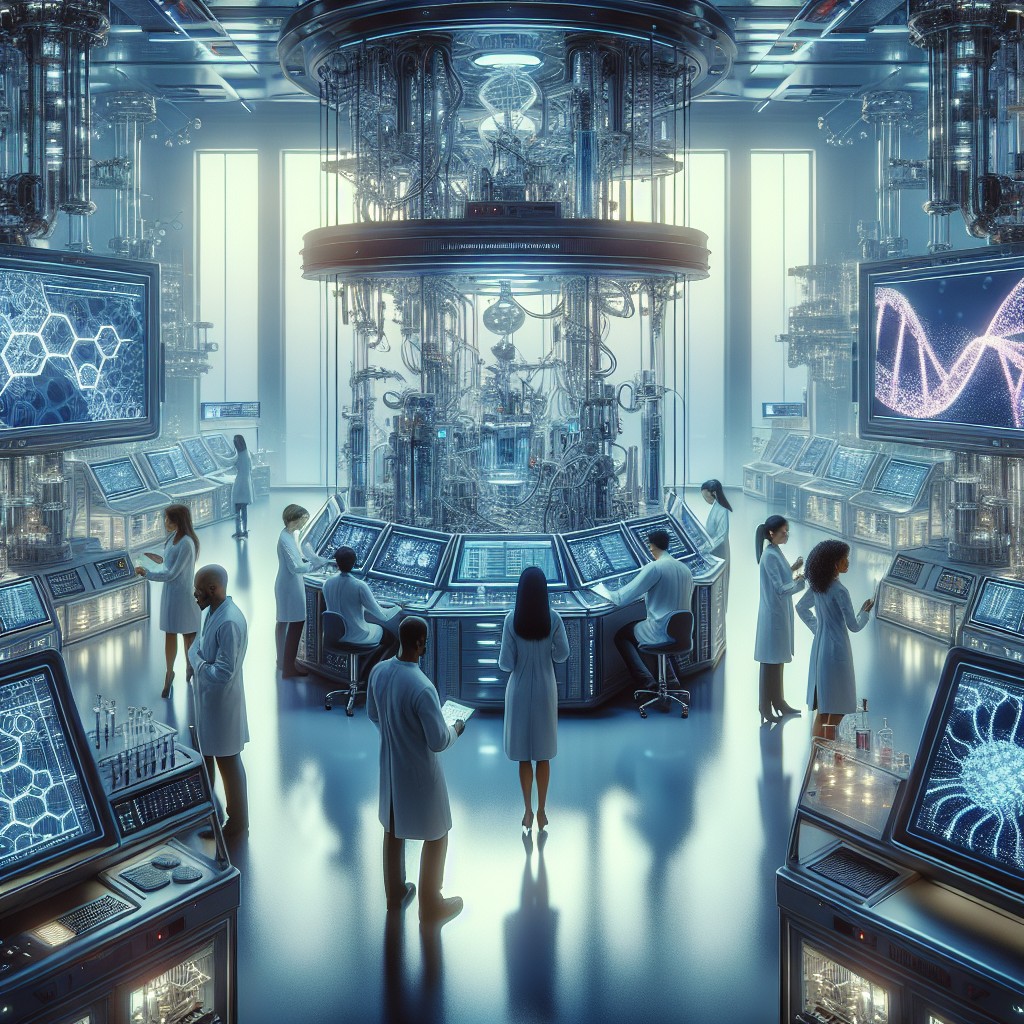
Quantum computing promises transformative advances across multiple industries, but understanding what is currently achievable versus what remains in the future is crucial. This article provides a clear assessment of the practical applications of quantum computing today and highlights the technical and scientific challenges that lie ahead.
Current State of Quantum Computing Hardware
Quantum computing relies on qubits, which differ fundamentally from classical bits by representing multiple states simultaneously. Leading technology companies and research institutions have developed quantum processors featuring tens to a few hundred qubits. Though these are significant milestones, current quantum computers face limitations such as qubit coherence times, error rates, and scalability. Devices like superconducting qubit systems and trapped ion setups are operational but remain largely experimental and confined to laboratory environments.
Practical Applications Demonstrated So Far
In terms of real-world impact, quantum computing has enabled proof-of-concept algorithms addressing specific problems. For example, researchers have explored quantum chemistry simulations to better understand molecular interactions and materials properties, which classical computers struggle to model efficiently. Additionally, quantum annealing methods have been applied to optimization problems, though the superiority over classical techniques often remains marginal and problem-dependent.
Challenges That Limit Immediate Widespread Use
The main obstacles to widespread deployment include error correction and qubit fidelity. Quantum error correction requires substantial overhead, multiplying the number of physical qubits needed to realize a single logical qubit. Currently, the resources required render this impractical at scale. Furthermore, noise and external disturbances affect qubit stability, which constrains the depth and complexity of quantum circuits that can be reliably executed. These technical challenges mean many anticipated applications, such as factoring large integers or breaking cryptographic codes, are not feasible yet.
Industries Eyeing Quantum Computing Benefits
Industries such as pharmaceuticals, finance, and logistics are actively investigating quantum computing’s potential to accelerate research and optimize complex operations. Efforts focus on hybrid approaches, combining quantum processors with classical systems to leverage near-term devices’ capabilities. While practical breakthroughs will likely emerge gradually, the transformative promise keeps significant investment and exploration ongoing. The path to fully realized quantum advantages in these sectors remains cautious and measured.
Looking Ahead: Timelines and Expectations
Experts estimate that fault-tolerant, universal quantum computers capable of outperforming classical systems on practical tasks are still years, if not decades, away. Progress depends on breakthroughs in qubit design, error correction, and hardware scalability. Research organizations and industry leaders continue to advance foundational knowledge and incremental improvements. Meanwhile, software development and algorithmic research aim to maximize the performance of existing quantum hardware. This staged progress indicates a long-term horizon rather than immediate disruption.
Given these factors, it is essential to recognize where quantum computing stands today: a promising but still emerging technology with limited practical deployment beyond research and specialized trials. Continued investment and scientific innovation will be required before its full potential is realized across widespread applications.
Frequently Asked Questions about quantum computing
What is quantum computing and how does it differ from classical computing?
Quantum computing utilizes quantum bits or qubits, which can exist in multiple states simultaneously, unlike classical bits that are either 0 or 1. This allows quantum computers to process certain types of problems more efficiently than classical computers.
Are there practical quantum computing applications available now?
Currently, quantum computing applications are mostly experimental, focusing on simulations and optimization in controlled research environments. Practical, widespread use of quantum computing remains limited due to hardware and error correction challenges.
What are the main technical hurdles facing quantum computing today?
The primary technical challenges include maintaining qubit coherence, reducing error rates, and achieving scalable error correction. These issues restrict the complexity and reliability of quantum computations at the present time.
Which industries are investing in quantum computing technologies?
Sectors such as pharmaceuticals, finance, and logistics are investing in quantum computing research to explore potential benefits in drug discovery, financial modeling, and complex optimization problems.
When can we expect quantum computing to have widespread impact?
While progress continues, experts predict that truly fault-tolerant quantum computers capable of broad practical impact are still likely years or decades away, pending further scientific and technological breakthroughs.